Earlier this month, I had the good fortune to steal away an hour with Channel Eye’s Founder and CEO, Tim Bullock. During our chat, we discussed the impact of first impressions and how quickly they are formed. Tim was astounded by how quickly we, as humans, form impressions of others, and it made me think this could be a good idea for a blog, so here it is.
According to Psychology Today, it takes around seven seconds for someone to form a first impression of you. That’s it. Before you’ve even finished your “Hi, my name is…”, their brain has already decided whether you’re credible, likeable and worth listening to.
Psychologists call this “thin-slicing”. We make quick judgments based on how someone looks and sounds, long before we get to the substance of what they say.
And get this… According to Princeton University, it takes someone a tenth of a second to decide whether a person is attractive and trustworthy. That’s just 100 milliseconds!! The study suggests that our brains are wired to quickly assess others based on facial expressions, often without realising it.
A OnePoll survey published in The Sun revealed that 35% of people find it difficult to change a first impression. So let’s begin by considering how we can make our first impression count.
There’s no doubt COVID changed the way we meet other people. The usual ways of meeting people, in meeting rooms, at a conference, or over a coffee at the Santander Work Cafe, shifted to Zoom and Teams calls. Meaning more first impressions were garnered on our screens.
This dovetails nicely with how we can curate our first impressions in a digital context.
And what I mean by that is, yup, you know me, you guessed right. LinkedIn.
Your LinkedIn profile, your latest post, even that selfie you nearly didn’t share, they’re all shaping what people think of you in those crucial first few seconds.
Psychology Today talks about how quickly people decide if you’re trustworthy, competent and likeable. LinkedIn has essentially become the digital version of that first firm handshake. Someone hears your name, sees your comment, or reads your latest post… and the next thing they do? They head on over to your profile.
So what are they greeted with?
A half-finished profile, a grey avatar, or worse still, a banner with a picture of a waterfall!
What if your LinkedIn profile showed a clear, professional photo, a strong headline that explains how you help clients and a profile that actually sounds like a human being?
Those first three seconds on your profile are doing a lot of heavy lifting. Recruiters, potential clients and colleagues will decide very quickly whether to read on or click away.
Now, if you follow me, you’ll know I’m the Queen of the selfies. Most of my posts include a selfie. Some silly, some cute and some downright bizarre. Here’s why I use selfies, and why you might want to, too.
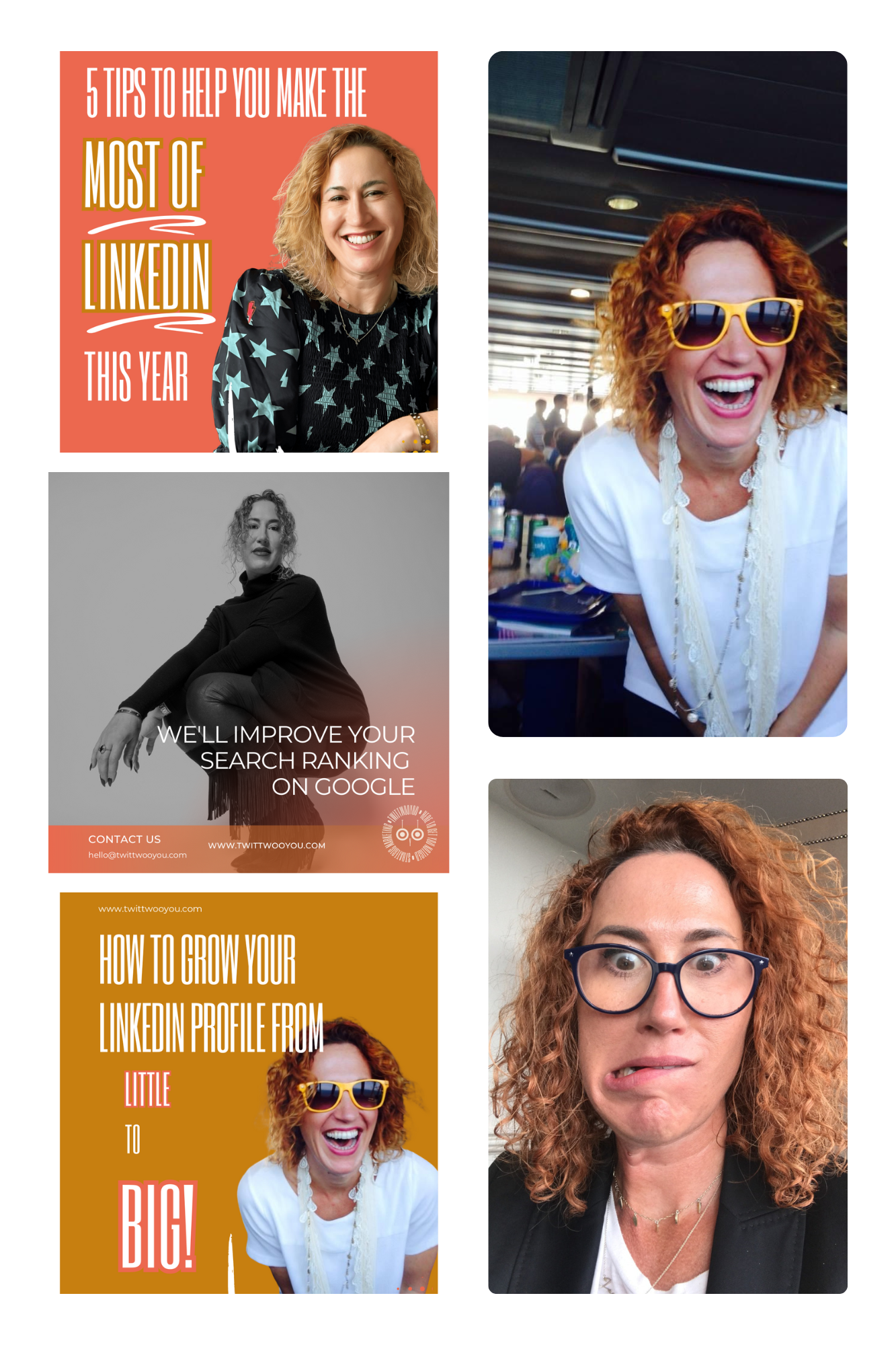
I get asked a lot why I share selfies with my posts. Is it vanity? No. It’s a strategy.
When people see your face regularly, a few important things happen:
You feel more familiar (and familiarity builds trust).
You feel more real. You’re no longer just a job title.
You’re easier to remember and recognise when someone spots you at an event or in town. You wouldn’t believe the number of people who say to me, “Oh, you’re Jo from LinkedIn,” when I meet them in social situations.
We’re wired to respond to faces. According to Willis, J., & Todorov, A. (2006), people judge traits like likability and trustworthiness in milliseconds. If I can use a simple selfie to create that connection and show there’s a real person behind the post, that’s a good move.
It doesn’t mean you have to plaster yourself all over LinkedIn every day. I’ve dropped my frequency from five times a week to just three times a week. But if you hide behind your posts in terms of not showing your face or writing like your boss wants you to, and not in your own voice, you’re hiding.
If your LinkedIn presence is more of an afterthought than an intention, here’s where those seven seconds really live and four ways you can transform that first impression from meh to wow!
1. Your profile photo and banner
This is your digital ice-breaker. Use a clear, current, professional headshot where you look approachable and friendly. Avoid heavy filters, holiday crops and “I’ve just zoomed in from a group photo.” Nobody likes to see the crop of your boyfriend/girlfriend’s elbow!
And don’t forget your banner! Your banner is prime real estate on LinkedIn. Use it to add context about what you do, who you help, or where you’re based. Adding your contact details, or how people can find you/learn more about you, is also really helpful.
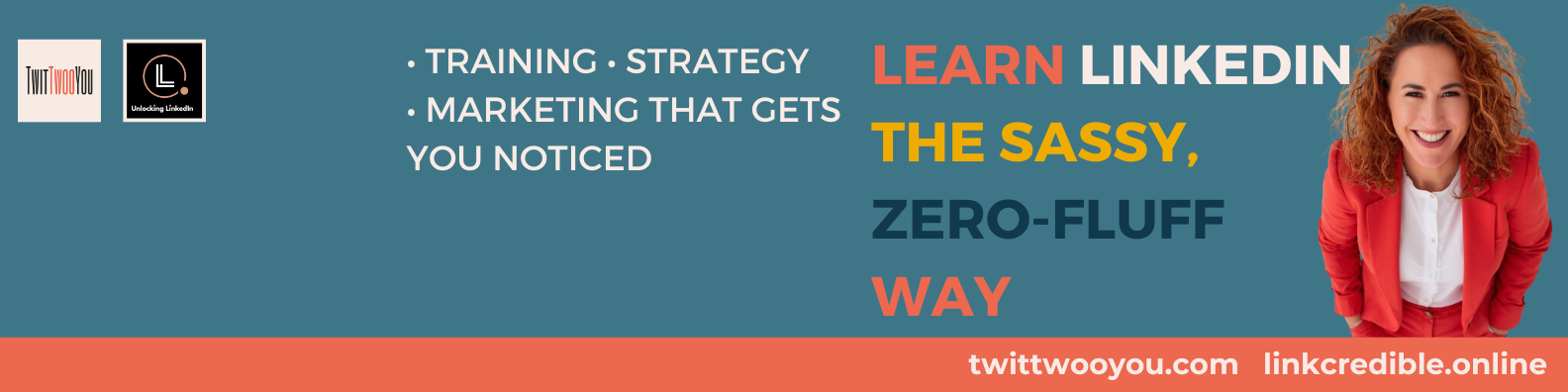
Image source: www.linkedin.com/in/jobuchanan

People will make a snap judgment based on what they see here. So, give them something that matches who you really are.
2. Your headline
Please, sweet baby cheeses, your headline is not your job title! I can’t tell you how many LinkedIn profiles I see that say “Sales Manager at Acme Inc.” Boring! Think of your headline like your elevator pitch. Your opportunity to grab the reader's attention is to explain who you are, what you’re good at, and how you help.
Check this out as a comparison, and tell me which one you like best:
“Associate, XYZ Ltd” vs “Trust professional, helping international families protect and grow their wealth”
One is forgettable. The other gives me a reason to take notice and act.
Here’s a great tip on how you can write your own headline. Consider these three things:
Who do I help?
With what?
Why does it matter?
3. Your About section
So, you’ve made a great first impression with a great-looking profile photo and catchy headline. Now is your chance to enhance things with a strong About section.
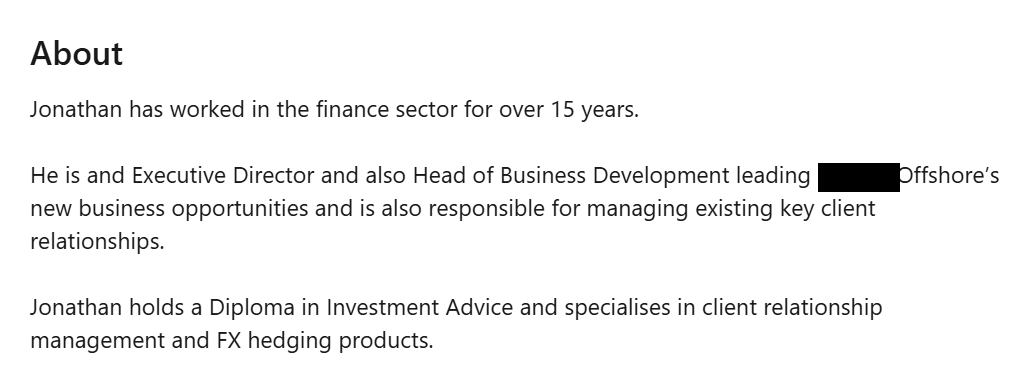
When you write your About section, it’s important to keep it human, clear and focused on the reader. Your About section is not your CV regurgitated. It’s a space for you to demonstrate what you do and how you help, peppered with a few testimonials for social proof.
Talk about the problems you help solve. Use plain English, and avoid jargon. If you work in financial services, it’s easy to fall into the trap of dropping jargon into your About section. But you need to take heed. Not everyone who works in financial services will be reading your profile. There will be people who don’t have a scooby doo what flotation, cash-flow, fixed income or fiduciary means. And try to add a bit of personality. Remember, people do business with humans, not CVs.
Oh, and one final tip, and this one is a biggie. Whatever you do, NEVER EVER write your About section in the third person. Last time I checked, you are not The King or The Prime Minister
4. Your activity
How active are you on LinkedIn? Are you a prolific, daily poster, a once-a-week thought dropper, a liker and sharer of posts or a lurker (someone who digests content on LinkedIn but never comments, likes or shares)?
Your activity on LinkedIn is a biggie and something people can quickly and easily check.
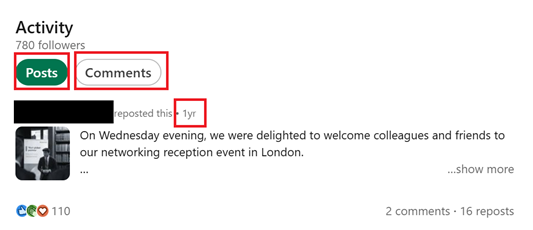
If your most recent activity is liking a 2023 post and nothing since, you’re sending a message (even if you don’t mean to). By remaining active on the platform with posts, thoughtful comments, and the odd selfie with a useful caption, you’re telling people:
You’re active.
You’re engaged in your industry.
You’re willing to show up, not just sit quietly in the corner.
Remember, people often decide whether to accept your connection request based on your profile and your recent activity. Those quick “thin slices” happen before they ever speak to you.
Here’s how you can make your first impression intentional
Now, we all know that you can’t control how everyone will perceive you, online or offline. But you can control the signals you’re sending.
Ask yourself these questions:
If someone Googles me or finds me on LinkedIn, what story do those first seven seconds tell?
Do my photo, headline and top posts match how I’d want to come across in a first meeting?
Do I look like someone my ideal client, employer or collaborator would want to talk to?
If the answer makes you say no and you feel an inch of cringe, don’t look at it like a failure; it’s actually an opportunity to shift things up.
Update your photo. Rewrite your headline. Add an About section that sounds like you. Start posting and commenting with intention. Include a few selfies so people can connect the content to the person.
Whether we like it or not, people are forming opinions in seconds. You can either leave it to chance or make those seconds work for you. And if you’re still hiding behind a logo and a generic job title? It might be time to give your digital first impression the same care you’d give if you were walking into a boardroom or attending a networking event.
Like what you’ve read?
Jo Buchanan, the author of this blog, is the Founder and Director of TwitTwooYou Limited, a business growth strategic consultancy centred on getting brands noticed. TwitTwooYou offers smart services to help businesses grow and achieve their aspirations and goals. Want to get your brand noticed? Get in touch for a free, no-obligation chat.